Safety Plan
Parrs Park
Auckland
22nd October 2026

Address:
L2, AUT Millennium, 17 Antares Place,
Rosedale, Auckland 0632
Website:
Content
1. Event overview and scope
2. Roles and key contacts
3. Event programme
4. Safety responsibilities and communication
5. Hazard and risk management
6. Emergency and evacuation arrangements
7. First aid and medical response
8. Missing rangatahi or person procedure
9. Incident and near-miss reporting
10. Weather, cancellation and site controls
11. Staff and volunteer briefing
12. Forms and checklists

- INTRODUCTION
This Safety Plan supports the safe delivery of Te Toi i Hawaiki Te Pā Whakarauroa Rangatahi Day at Parrs Park. It outlines the responsibilities, hazards, controls and emergency procedures required to protect rangatahi, staff, volunteers, contractors and visitors involved in the event.
The event management team has overall responsibility for implementing this plan and ensuring that relevant safety information is communicated to everyone involved.
The event management team will communicate with those assisting and contracted for this event and request everyone to aid in the implementation of the Safety Plan.
All contracted companies will be required to provide confirmation of implementing their own safety plan for the event.
The Safety Plan is directly related to the activities for delivery of the Te Toi I Hawaiki Te Pā Whakauroa event. The event locations are the venues and grounds.
Organised by Te Ao KITA and He Oranga Poutama ki Tāmaki Makaurau, Te Toi i Hawaiki | Te Pā Whakarauora encourages whānau to be more involved in their culture and play together.
Responsibilities
It is the responsibility of everyone to conduct themselves in a manner that will not cause harm or injury to themselves or other people. To assist everyone in this the following sections have been identified by the organisation and people have been appointed to these roles as representatives.
A full list relating to each venue is available upon request.
Event Key contact details
Event Staff
| Position | Name | Number |
| Lead Delivery Partner | Moe Lewin (Te Ao KITA) | 021585023 |
| Delivery Provider | Metiria Light (Aktive) | 0212016053 |
| Operations | Danielle Tahuri (Te Ao KITA) | 0272010211 |
Service Provider
| Position | Name | Number |
| Health and Safety | ||
| Event Medical | Pirihira Puata (Nurse) | 0226187813 |
| Security | Graham Paniora | 0274666404 |
| Traffic Coordinator | Graham Paniora | 0274666404 |
Marketing and Communication
| Position | Name | Number |
| Comms Lead Aktive | Jo Redfern-Hardisty | |
| Comms Lead Te Ao KITA | Moe Lewin | 021585023 |
| Photography/Videography | Te Pitomata Productions - Manaia Ward-Tareha | 02108126456 |
| Rangatahi Comms Te Ao KITA | Kaea Paniora Taimaania Nepe Hawaiki-Taurikura Pirini Te Rauhea Apaapa |
[ML1]Not Applicable
Purpose
This Safety Plan supports the safe delivery of Te Toi Hawaiki Te Pā Whakauroa Rangatahi Day at Parrs Park. It sets out the responsibilities, hazards, controls and emergency arrangements intended to protect rangatahi, staff, volunteers, contractors and visitors involved in the event.
The event management team has overall responsibility for implementing this plan and ensuring relevant safety information is communicated to everyone involved.
Event Description
Te Toi Hawaiki Te Pā Whakauroa Rangatahi Day provides an opportunity for rangatahi to connect, participate and engage through culturally grounded activities and experiences.
- Roles and Key Contacts
Role | Name | Mobile | Key Responsibility |
Event Lead | Moe Lewin | 021585023 | Overall event coordination and decision-making |
Health & Safety Lead | Maintains this plan, hazard register and incident process | ||
First Aid Lead | Pirihira Puata | 0226187813 | First aid response, records and escalation |
Activity lead/s | Danielle Tahuri (TAK) | 0272010211 | Safe delivery and supervision of activities |
Site / Venue Contact | Moe Lewin | 021585023 | Site access and venue requirements |
Communications Contact | Approved event communications | ||
Emergency Services | 111 | 111 | Police, Fire, Ambulance |
- Event programme
Thursday 22 October — event day
Time | Activity | Location / notes |
5:00am | Te Ao KITA setup and safety checks; kura gazebo setup available | Parrs Park; check site map and parking |
7:00am | Kura gazebo setup in designated areas; water station ready | Parrs Park |
8:00am | Kura assemble at waharoa | Hoani Waititi Marae |
8:30am | Pōhiri; one manuhiri kura speaker and agreed waiata | Hoani Waititi Marae |
9:00am | Muffins and water; supervised walk to Parrs Park | Kaiako conduct headcounts before and after walk |
9:00–9:25am | Teams prepare for games; check-in and warm-up | Parrs Park; timing subject to pōhiri and walk |
9:30am | First games begin; announcements by Kaea Paniora | Per published draw |
12:00pm | Light lunch: sausage sizzle, drink and snacks | Water near kura gazebos; games continue per draw |
1:30pm | Finals | Fields per draw; confirm match duration |
2:00pm | Prizegiving and closing karakia | In front of Te Ao KITA HQ gazebos |
2:30pm | Kura depart; leave areas tidy | Kura headcount and sign-out |
3:00pm | Te Ao KITA pack down and final field check | Equipment, rubbish, hazards |
- Safety responsibilities and communication
Before activities begin
- Confirm the responsible leads and emergency contact method
- Complete a site walk-through and update the hazard register
- Confirm first aid location, assembly point, toilets, emergency access
- Check that equipment is suitable, secure and used by competent people.
- Brief staff, volunteers and providers on this plan and record attendance.
Communication during the event
- Use the agreed contact method for event staff and activity leads.
- Report new hazards, incidents, near misses and welfare concerns immediately.
- Only the nominated communications contact should provide external or media statements about an incident.
- Follow instructions from emergency services or authorised venue personnel.
Contractors and activity providers
- Provide relevant safety information for their work, equipment and activities.
- Identify activity-specific hazards and controls before delivery begins.
- Use suitably trained, qualified or supervised workers where required.
- Report incidents and changes to the Event Lead or Health and Safety Lead.
- Hazard and risk management
Event hazard register
Hazard | Potential Harm | Controls | Residual Risk |
Trips, slips and uneven ground | Sprains, falls or impact injuries | Inspect site; mark or isolate holes and hazards; keep routes clear; use suitable footwear; monitor wet or muddy areas. | |
Activity participation | Collision, falls or activity-related injury | Use age-appropriate activities; brief participants; provide active supervision; maintain safe spacing; stop unsafe behaviour. | |
Weather, heat and UV | Sunburn, dehydration, heat illness or weather exposure | Monitor forecasts; provide water, shade and breaks; encourage sun protection; modify or stop activities when conditions are unsafe. | |
Vehicle movements | Person struck by vehicle | Separate vehicles and pedestrians; restrict vehicle access during event hours; use walking pace and a spotter when reversing; keep emergency access clear. | |
Manual handling | Strain, crush or impact injury | Plan lifts; keep routes clear; use team lifting or aids; stay within individual capability. | |
Electrical equipment and leads | Electric shock, burns or trips | Use suitable equipment; visually inspect before use; keep connections dry; secure and cover leads; isolate damaged equipment. | |
Temporary equipment, gazebos or signage | Collapse, impact or trip injury | Locate safely; anchor or weight appropriately; protect pegs and ropes; inspect throughout the event; remove in unsafe wind. | |
Food & Drink? | Burns, allergic reaction or food-related illness | Use safe food-handling practices; identify allergens where possible; keep hot items controlled; ensure hand hygiene and clean surfaces. | |
Aggressive or threatening behaviour | Physical or psychological harm | Keep distance; use calm communication; seek support; move others away; contact Police if there is immediate danger. | |
Medical event or allergy | Distress or exposure to harm | Know medical support arrangements; provide first aid within competence; call 111 when required; keep emergency access clear. | |
Dogs, insects or environmental hazards | Illness or serious harm | Monitor the site; ask owners to control dogs; isolate nests or hazards; provide first aid and escalate when required. | |
Bikes and scooters | Bites, stings or allergic reaction | Ask users to walk through the event area; provide a safe parking location; remove obstructions from access routes. | |
Waste and housekeeping | Trips, cuts or hygiene issues | Provide bins; service them regularly; remove broken or sharp objects safely; complete final site clean-up. |
Record additional activity-specific hazards below
Hazard | Potential Harm | Controls | Owner | Risk |
- Emergency and evacuation arrangements
Immediate actions
1. Stop the activity and assess immediate danger.
2. Call 111 where emergency assistance is required. State the event name, exact location, nature of the emergency and actions being taken.
3. Move people away from danger using the safest available route.
4. Notify the Event Lead and follow instructions from emergency services or authorised venue personnel.
5. Keep emergency access routes clear and send someone to meet responding services.
6. Account for staff, volunteers and participant groups at the assembly point.
7. Do not re-enter an affected area until authorised.
Event emergency information
Item | Confirmed detail |
Address for 111 | Parrs Park, Auckland. Add the precise access point and nearest street address before issue. |
Emergency access point | |
Assembly point | |
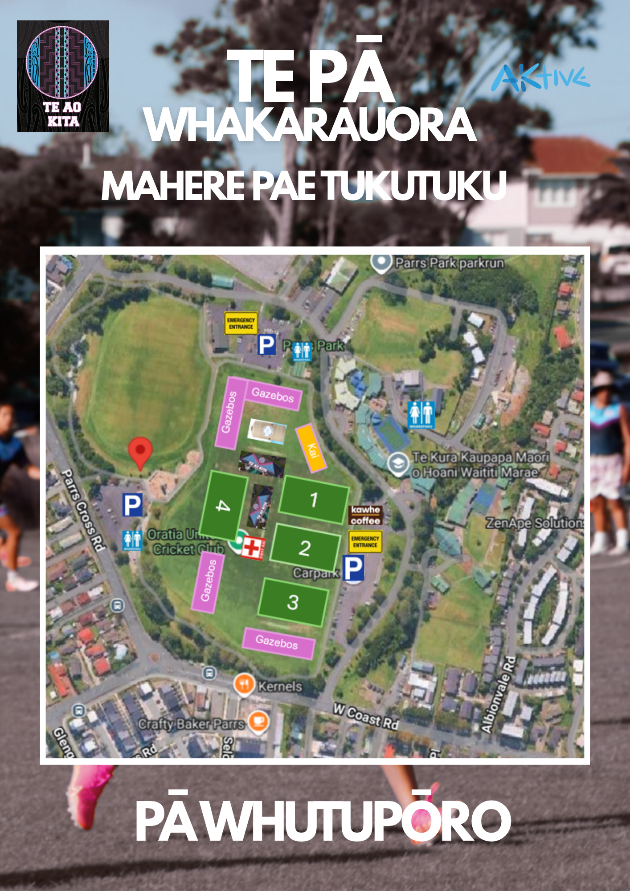
First aid location | Located need to Te Ao KITA HQ |
Missing-person meeting point | Te Ao KITA HQ |
Nearest AED | |
Staff communication method | Text message |
Person meeting emergency services | Pirihira Puata |
Evacuation triggers may include
- Fire, smoke, structural failure or hazardous spill
- Severe weather, lightning or another civil Defence emergency
- Threatening behaviours, suspicious item or police direction
- A serious medical event or another situation requiring the area to be cleared
- First aid and medical response
- First aid equipment must be readily accessible and its location communicated during the briefing.
- First aid should only be provided within the responder’s level of training and competence.
- Call 111 for a serious or life-threatening condition, or when urgent medical assistance is required.
- Protect the person’s privacy, keep the area clear and arrange for someone to guide emergency services.
- Record all first aid treatment, injuries, illnesses and medical escalations on the incident form.
Requirement | Confirmed arrangement |
First Aid Lead | Pirihira Puata |
First aid kit location | Located next to Te Ao KITA HQ as per sitemap |
AED location | |
Emergency vehicle access | Oratia Football Club access - parking |
8. Missing rangatahi or person procedure
1. Notify the Event Lead immediately.
2. Confirm the person’s name, age, description, last known location and who is responsible for them.
3. Keep one responsible person with the reporting parent, caregiver or group lead while the search is coordinated.
4. Check agreed activity areas, toilets, boundaries and the designated meeting point without placing others at risk.
5. Use discreet communications. Do not announce personal details publicly unless directed by Police.
6. If a young person is located, ensure two authorised adults remain with them where practicable.
7. Verify the identity and relationship of the collecting adult before releasing the young person and record the handover.
8. Contact Police promptly where there is immediate concern, the person is vulnerable, or the search is unsuccessful.
9. Record the incident and debrief the response.
- Incident and near-miss reporting
All accidents, incidents, injuries, illnesses and near misses must be reported promptly to the Event Lead or Health and Safety Lead and recorded. The response should focus on making the situation safe, supporting affected people and preventing recurrence.
Reporting process
1. Provide first aid or emergency assistance and make the area safe.
2. Notify the Event Lead or Health and Safety Lead.
3. Preserve the scene where required, except where action is needed to save life, prevent harm or maintain essential access.
4. Record what happened, who was involved, witnesses, treatment provided and immediate actions.
5. Review the relevant hazards and controls before activities resume.
6. Escalate a potentially notifiable event through Aktive’s established health and safety process and obtain competent advice where needed.
- Weather, cancellation and site controls
Weather monitoring
- Check the forecast before set-up and monitor conditions during the event.
- Consider heat, UV, rain, wind, lightning, ground conditions and visibility.
- Modify, pause, relocate or cancel activities if controls are not sufficient.
- Communicate changes clearly to staff, providers, groups and caregivers as appropriate.
Cancellation or significant change
Decision consideration | Event Response |
Severe weather warning | Assess site and activity exposure; modify, postpone or cancel where risks cannot be controlled. |
Unsafe ground or access | Isolate the area, relocate activities or suspend entry. |
Loss of essential services | Assess effects on toilets, water, communications, first aid and safe delivery. |
Public health direction | Follow current organisational and public authority requirements. |
Serious incident or emergency-service direction | Stop affected activities and follow the direction of the controlling authority. |
Site plan requirements
- Staff and volunteer briefing
All staff, volunteers and relevant providers should receive a briefing before participants arrive. Record attendance on the briefing register.
Briefing topic | Key message |
Emergency response | Call 111 when needed, move people away from danger and follow authorised instructions. |
Personal safety | Wear suitable clothing and footwear; use sun protection, hydration and task-specific PPE where required. |
Restricted areas and equipment | Do not enter restricted areas or use equipment without authorisation or competence. |
Roles and contacts | Know the Event Lead, Health and Safety Lead, First Aid Lead and activity leads. |
Site orientation | Know boundaries, toilets, first aid, assembly point, emergency access and missing-person meeting point. |
Hazards and controls | Review the hazard register and report changes immediately. |
Incident response | Make the area safe, provide assistance, notify the lead and record the incident. |
Missing person | Notify the lead immediately and follow the agreed search and reunification process. |
Behaviour concerns | Keep distance, request support and contact Police if there is immediate danger. |

 Admin Login